
The Re-New Approach

Woman practicing yoga or meditation sitting cross-legged on a mat, with hand on her chest and stomach, in a light-filled room.

A structured, individualized process for assessment, care planning, and monitoring change over time.

Our Re-New Approach is a step-by-step process that uses chiropractic care and neurology-informed assessment to better understand how your balance, vision, movement, spine, and nervous system may be working together. We use clinical assessment and objective testing, to help guide individualized recommendations for patients experiencing concerns such as dizziness, concussion-related symptoms, headaches, migraine-related concerns, balance changes, and movement-related difficulties.

The Usual Patient Journey

Step 1

Initial Assessment

We discuss your symptoms, health history, goals, previous testing or care, and how your concerns are affecting daily life.

Step 2

Neurologically-informed Assessment

Your assessment may include testing of eye movements, balance, coordination, posture, movement control, reflexes, sensory responses, spinal function, and other relevant findings when clinically indicated.

Step 3

Initial Care Recommendations

Based on your findings, we may recommend initial exercises, home strategies, referral, co-management, or additional testing when appropriate.

Step 4

Personalized Care Plan

We review your findings, explain what they may mean, and discuss an individualized care plan based on your history, assessment findings, goals, and response to care.

Step 5

Home Program & Follow-Up

When appropriate, you receive a home program with instructions, frequency, order, and follow-up recommendations. Your plan may be adjusted over time based on your response.

« swipe »

Objective Testing and Assessment Tools

Testing recommendations vary by patient and are based on clinical findings.

  • Computerized Assessment of Postural Systems, or CAPS, uses a force plate to observe how your body maintains balance while standing. During the assessment, you stand on a specialized platform under different conditions while sensors record subtle shifts in weight and changes in position.

    This assessment can provide information about postural control, balance strategies, and how your body responds to different balance challenges. These findings may help guide care recommendations, home exercises, referral, or co-management when appropriate.

  • Video-oculography, or VOG, uses specialized goggles with built-in cameras to record and analyze eye movements. During the assessment, you may be asked to follow visual targets or complete specific eye movement tasks.

    VOG can provide information about eye tracking, visual stability, and patterns that may be associated with dizziness, motion sensitivity, disorientation, visual discomfort, difficulty focusing, or balance concerns. Results are reviewed alongside your history and clinical findings to help guide appropriate next steps.

  • NeckCare technology is used to assess neck movement control and joint position sense. The system uses lightweight sensors to observe how accurately the neck and head move through specific tasks.

    This assessment may provide information about neck control, proprioception, posture, and movement patterns that may be relevant for patients experiencing neck pain, headaches, dizziness, or balance-related concerns. Findings may help guide individualized care recommendations when appropriate.

  • Video Head Impulse Testing, or vHIT, is used to assess the vestibulo-ocular reflex, also known as the VOR. The VOR helps keep vision stable during head movement.

    During the assessment, specialized goggles track eye movements while the head is moved in specific directions. The results can provide information about how the eyes and vestibular system are responding during quick head movements. These findings may be relevant for patients experiencing dizziness, balance concerns, motion sensitivity, or visual instability.

  • Tilt Table Testing is used to observe how heart rate, blood pressure, and symptoms respond to changes in position, especially when moving from lying down to upright.

    During the assessment, you lie on a table that tilts to different angles while heart rate, blood pressure, and symptoms are monitored. This assessment may provide information about patterns associated with lightheadedness, fainting, near-fainting, orthostatic intolerance, suspected POTS, or other autonomic-related symptoms.

    Tilt Table Testing is not part of our standard testing protocol. It may be performed on request or recommended by one of our providers based on your symptoms and clinical presentation.

Dr. Rachel performing VOG on a female patient

Intensive Care Option

A healthcare worker in green scrubs administering a medical test to a patient lying on a hospital bed in a clinical setting.

For some patients, a higher-frequency care schedule may be recommended based on assessment findings, goals, travel needs, and clinical appropriateness. An intensive schedule may include multiple appointments per day over a shorter period of time. Objective testing may be used before, during, or after the care period when clinically indicated to monitor findings and guide recommendations.

What may be included:

✔️ Up to 16 rehabilitation sessions, approximately 30 minutes each
✔️ Up to 2 comprehensive evaluation and testing appointments, approximately 90 minutes each
✔️ Up to 10 red light therapy sessions, approximately 30 minutes each
✔️ Functional neurology-informed exercises and sensorimotor therapy
✔️ Access to Recovery Room and Kitchen Area
✔️ Tailored At-Home Exercise Program after Intensive plan concludes

This option may be considered for patients travelling from outside Calgary or for patients whose assessment findings suggest that a higher-frequency schedule may be appropriate.

Standard Care
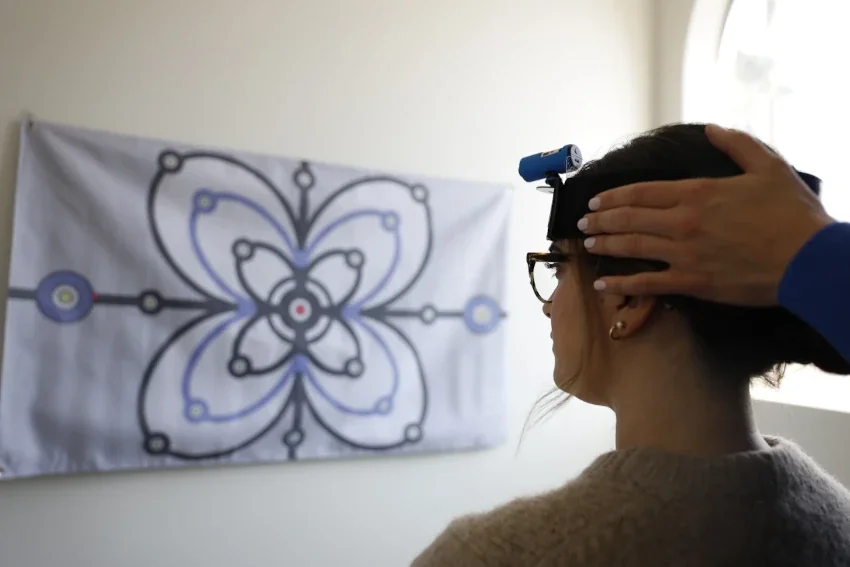
A woman getting a head MRI scan while a technician positions her head in the MRI machine. A decorative wall hanging is visible in the background.

For many patients, care is scheduled over a longer period with appointments once or twice per week, depending on assessment findings, goals, availability, and response to care. Standard care may include in-clinic appointments, home exercises, and additional testing when clinically indicated. Your schedule and recommendations are reviewed with you before care begins.

What may be included:

✔️Access to Recovery Room and Kitchen Area
✔️Tailored At-Home Exercise Program
✔️Follow-up appointments based on your care plan

Optional Add-ons

Red Light Therapy session
Normatec Compression Therapy
Vie Light Therapy

This option may be appropriate for patients living in Calgary or nearby areas, or for patients whose symptoms and goals are better suited to a lower-frequency schedule.

Not Sure Which Approach May Be Appropriate?

Silhouette of a person standing on a mountain ridge with a cloudy sky in the background.

Start With a 30-min Phone Consultation

If you are experiencing symptoms such as dizziness, vertigo-like sensations, headaches, migraine-related concerns, lightheadedness, fatigue, visual discomfort, or balance changes, an assessment can help identify relevant findings and guide appropriate next steps.

During your 30-minute Phone Case Review, we will:

✅Review your symptoms and health history
✅Discuss what may be contributing to your concerns
✅Determine whether an in-person assessment may be appropriate
✅Outline possible next steps, including care options, co-management, or referral.

This focused conversation is designed to help you better understand whether our clinic may be an appropriate next step.

Financing Options

An elderly man and a woman shaking hands in a professional setting.

Anew Chiropractic Clinic partners with Medicard by iFinance to offer optional financing for eligible patients. Financing may help some patients spread the cost of care over time.

Approval, payment terms, interest rates, repayment schedule, and financing conditions are determined directly by Medicard.

Financing is optional. A detailed estimate of recommended care and associated fees will be reviewed with you before beginning care, so you can make an informed decision.

Medicard may offer:

☑️ No down payment, subject to approval
☑️ No collateral
☑️ Competitive interest rates
☑️ Flexible terms from 12 to 84 months
☑️ No early payment penalties
☑️ Financing options up to $50,000, subject to approval

Medicard logo

Frequently Asked Questions

  • An Intensive Care Program is a higher-frequency care option that may be recommended for some patients after an initial assessment and evaluation. Instead of spacing appointments over several weeks or months, care is scheduled over a shorter period of time with multiple sessions per day. The purpose is to provide a structured schedule for assessment, rehabilitation, monitoring, and home-care planning when this approach is clinically appropriate. Recommendations are individualized and based on your health history, assessment findings, goals, travel needs, and response to care.

  • Every patient responds differently. The goal of intensive care is to provide a structured care schedule, monitor clinical findings over time, and adjust recommendations based on your response. Some patients report changes in symptoms such as dizziness, balance, coordination, visual comfort, activity tolerance, or pain. However, results vary and cannot be guaranteed.

    Progress is monitored through clinical observations and objective findings when appropriate.Your progress is objectively measured through re-evaluations conducted during and after your program to ensure your treatment remains targeted and effective.

  • Intensive care is usually scheduled Monday through Friday. Start times often begin around 9:00 or 9:30 AM, depending on scheduling availability. Patients should generally expect to be in the clinic for approximately 4 to 6 hours per day. Each day may include multiple rehabilitation sessions, structured breaks, and supportive therapies when appropriate. A sample day may include several 30-minute rehabilitation sessions, rest periods, and therapies such as red light therapy if included in the recommended plan. Your exact schedule will be reviewed with you before care begins.

  • Each plan is individualized. A typical 5-day intensive schedule may include:

    • Up to 16 rehabilitation sessions, approximately 30 minutes each

    • Up to 10 red light therapy sessions, approximately 20 to 30 minutes each

    • Up to 2 Re-evaluations and review appointments to monitor findings and adjust recommendations when appropriate

    Your exact schedule may vary depending on your assessment findings, goals, clinical needs, and response to care.

  • Your intensive schedule is planned in advance so appointments, testing, breaks, and supportive therapies can be coordinated appropriately. There may be some flexibility depending on clinic availability and your needs. However, because intensive care involves multiple appointments in a shorter period of time, we recommend planning your week carefully before starting.

  • An intensive schedule may be considered for patients with more complex or persistent symptoms, patients travelling from outside Calgary, or patients whose assessment findings suggest that a higher-frequency care schedule may be appropriate. Eligibility is determined after your initial intake and evaluation. If intensive care is not appropriate, we will discuss other care options or referral recommendations when needed.

  • You can begin by booking an Initial Intake and Evaluation. After these appointments, your chiropractor will review your findings and discuss whether an intensive care option is appropriate. If an intensive schedule is recommended and you choose to proceed, our team will help coordinate the appointments through Jane App, our secure online booking system.

  • The first step is to complete the recommended assessment process. This may include:

    • Initial Intake: approximately 75 minutes

    • Evaluation, Testing, and Review: approximately 90 minutes

    These appointments may be completed on the same day or scheduled separately, depending on your availability and clinical needs. This process helps us understand your history, assess relevant findings, and determine what care options may be appropriate.

  • Costs vary depending on the assessment, testing, number of sessions, supportive therapies, and care recommendations included in your plan. We may recommend a 1-day, 2-day, 3-day or a 5-day Intensive.

    Typical fees may include:

    • Initial Assessment: $365

    • Evaluation, Testing, and Review: $550

    • Rehabilitation Sessions: approximately $190 per session

    • Red Light Therapy: approximately $25 per session

    • Re-Evaluation, Testing, and Review: $550

    A full 5-day intensive may commonly range from approximately $5,000 to $5,500, depending on the recommended schedule and services included. All fees and recommended services will be reviewed with you before beginning care.

    You are not required to proceed with an intensive plan, and recommendations may change based on your clinical needs and response to care.

  • Coverage depends on your insurance provider and individual plan. Services are billed using the appropriate clinic fee codes for the assessment, testing, treatment, or therapy provided.

    We provide detailed receipts that patients can submit to their extended health benefit provider for possible reimbursement. We recommend confirming your coverage, annual limits, referral requirements, and reimbursement rules with your insurance provider before beginning care.

  • At this time, we do not offer direct billing. Patients pay the clinic directly and receive detailed receipts that may be submitted to their insurance provider for possible reimbursement.

  • Yes. We offer financing options through Medicard by iFinance for eligible patients. Financing allows approved patients to spread the cost of care over time through monthly payments. Approval, interest rates, repayment terms, and financing conditions are determined directly by Medicard.

    Financing is optional. Patients are encouraged to review all terms carefully before applying. To learn more, please visit Medicard.

  • Yes. With written consent, we can provide relevant clinical documentation, chart notes, reports, or test results when requested.

    Additional fees may apply for report preparation or administrative documentation. Reimbursement for these fees depends on your insurer, legal representative, or third-party payer, so we recommend confirming coverage directly with them.