
Stiff Neck, Back and Shoulders with Dizziness, Eye Strain, or Unstable Vision
We assess symptoms such as neck stiffness, shoulder tension, upper back tightness, dizziness, blurry vision with movement, or unstable eye movement
Still unsure yet? Book 30-min Case Review Phone Consultation Today!
Stiff Neck, Back and Shoulders May Not Be Just Muscle Tension
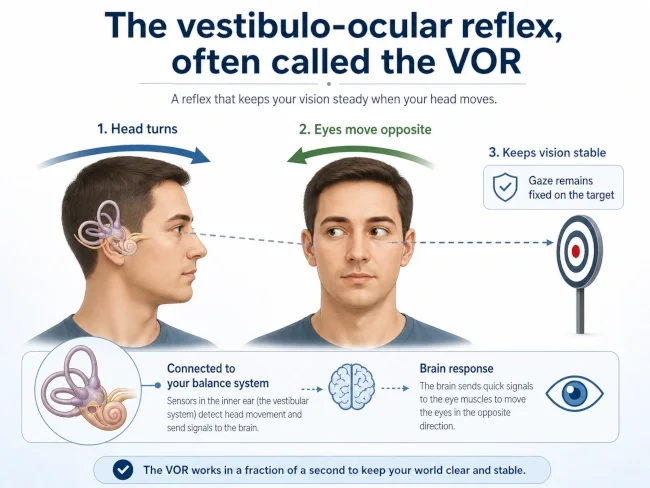
Most people think of neck and shoulder tension as a muscle problem caused by stress, posture, injury, or repetitive strain. However, when stiffness occurs alongside dizziness, blurry vision, eye strain, balance problems, or motion sensitivity, the nervous system may also be involved. Your neck, eyes, inner ear, and brain work together to keep your vision stable and help you understand where your body is in space. When this system is not functioning efficiently, the body may respond by bracing, creating ongoing tension through the neck, shoulders, and upper back.
For some people, persistent stiffness is not just about tight muscles. It may be a protective response from the nervous system when balance, visual stability, or head movement feels less reliable.
The VOR Relation to Neck and Shoulder Tension

The vestibulo-ocular reflex (VOR) helps keep your vision stable when your head moves. It allows you to walk, drive, read signs, and look around without the world appearing blurry or unstable. When the VOR is working well, your eyes, inner ear, neck, and brain coordinate automatically. When this system is not functioning efficiently, symptoms may include dizziness, imbalance, blurry vision with movement, nausea, difficulty focusing, or a sense that your surroundings are moving or unstable.
In some cases, the body responds by limiting head movement through increased tension in the neck, shoulders, and upper back. Over time, this protective strategy can contribute to recurring neck stiffness, chronic tension, and discomfort that worsens with activities such as computer work, driving, or moving through busy environments.
What Unstable Eye Movement May Feel Like

Unstable eye movements do not always feel obvious. Instead, people may notice symptoms such as difficulty focusing, eye fatigue, blurred vision with movement, dizziness when turning their head, visual overwhelm, or feeling disoriented in busy environments. Some individuals experience oscillopsia, a sensation that the world appears shaky, jumpy, or moving when it is actually still. These symptoms often become more noticeable when walking, driving, scrolling on a phone, reading signs, or navigating visually busy places such as grocery stores, malls, or traffic.
For some people, the body compensates by stiffening the neck and shoulders. Rather than relying on the eyes and vestibular system to stabilize vision during movement, the nervous system may reduce head motion, contributing to ongoing neck tension and stiffness.
The Neck, Balance System and Brain Are Closely Connected
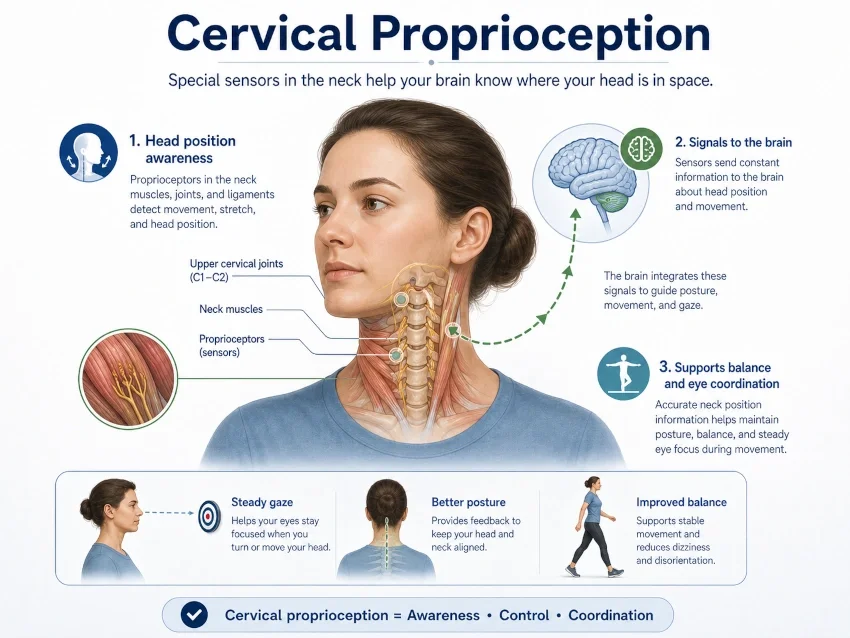
The neck contains sensory receptors that help the brain understand the position and movement of the head, a process known as proprioception. This information works alongside the visual and vestibular systems to support balance, orientation, and stable movement. Researchers have described cervicogenic dizziness as a condition where altered sensory input from the neck may contribute to dizziness, imbalance, or disorientation, particularly when neck pain and dizziness occur together.
However, not every stiff neck causes dizziness, and not every dizzy patient has a neck-related issue. Dizziness and visual instability can result from many causes, including inner ear disorders, neurological conditions, migraine, concussion, medication effects, vision problems, blood pressure changes, and other medical concerns.
How We Assesses Stiffness, Dizziness, and Unstable Vision
We assessment may include a detailed review of your symptoms, triggers, history, injuries, concussion history, dizziness patterns, visual complaints, posture, head movement tolerance, and balance challenges. Your evaluation may also look at eye movements, visual tracking, gaze stability, balance, head and neck movement, coordination, and how your symptoms respond to specific neurological or vestibular challenges. The purpose is to understand whether your neck, shoulders, and upper back are primarily dealing with local mechanical tension, or whether they may be part of a larger pattern involving the eyes, vestibular system, cervical proprioception, and brain-based control of posture.
A Neuro-Specific Care Approach
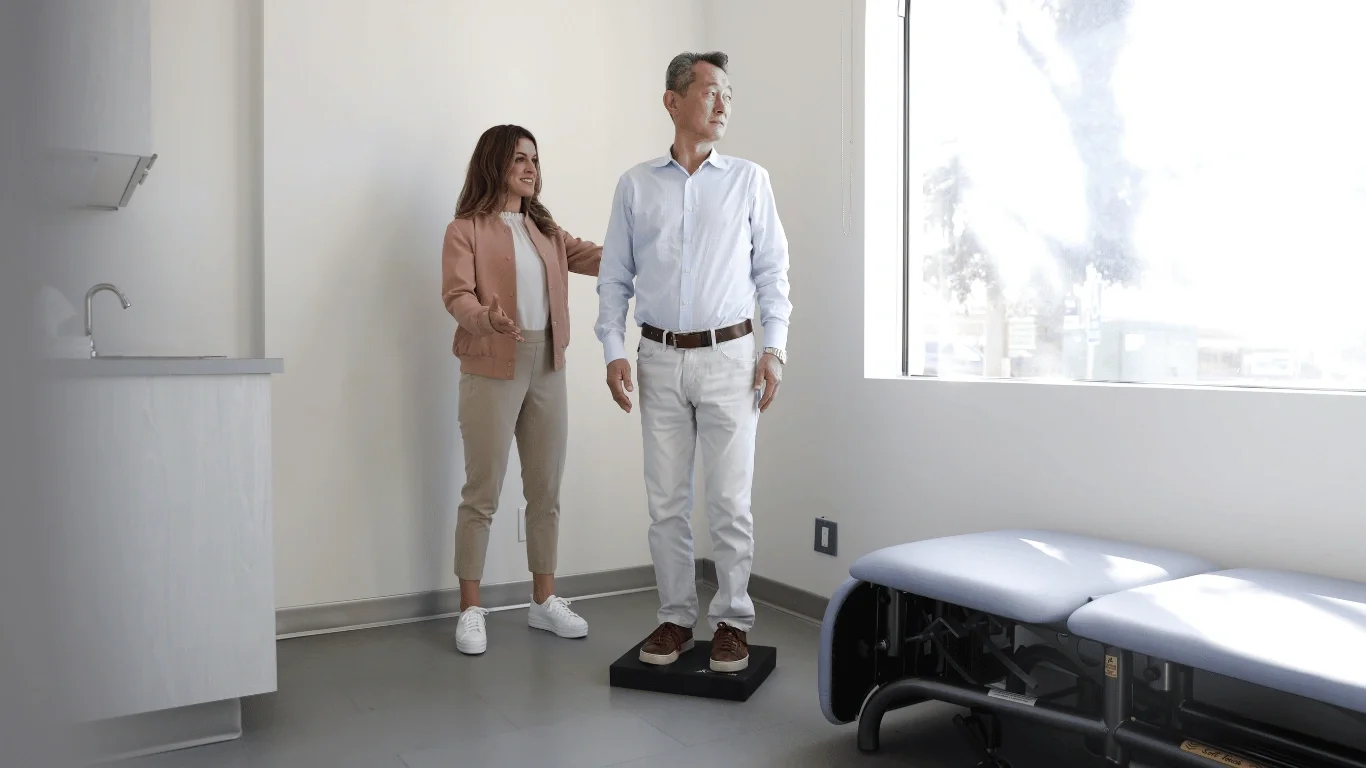
Care is individualized based on your assessment findings. The goal is not to force the neck to relax temporarily, but to improve the way your nervous system coordinates movement, vision, balance, and posture. Vestibular rehabilitation uses exercises to help manage dizziness and balance problems. Depending on the patient, this may include balance training, gaze stabilization, and movement-based exercises designed to improve tolerance and function. For patients with neck-related dizziness or visual instability, care needs to be progressed carefully. Too much stimulation too soon may flare symptoms. Too little challenge may not create meaningful change. The goal is to find the right dose for your nervous system.
When Should You Seek Help For Your Stiff Neck, Back, or Shoulders
You may stretch, massage, adjust, strengthen, or rest, but the tightness keeps returning because the underlying coordination problem has not been addressed. You may notice that your symptoms are worse when you move your head, look up or down, turn quickly, drive, work on a computer, walk through visually busy spaces, read while tired, or transition from sitting to standing. You may also notice symptoms such as dizziness, imbalance, blurry vision, eye strain, headaches, nausea, poor depth perception, visual motion sensitivity, difficulty concentrating, or feeling like your body is bracing even when you are trying to relax. When these symptoms cluster together, the question becomes less about “which muscle is tight?” and more about “why does the nervous system feel the need to keep bracing?”

Frequently Asked Questions about Stiff Neck Back or Shoulders
-
A stiff neck can be associated with dizziness in some people, especially when neck movement, cervical proprioception, posture, and balance processing are involved. However, dizziness can have many causes, so it should be properly assessed rather than assumed to come from the neck.
-
Yes, they may contribute. When the eyes, vestibular system, and brain are not stabilizing vision efficiently during head movement, the body may compensate by limiting head motion and bracing through the neck, shoulders, and upper back.
-
The vestibulo-ocular reflex, or VOR, is a reflex that helps keep your eyes stable when your head or body moves. It allows you to keep looking at an object while moving without the image becoming blurry or unstable.
-
Unstable vision may feel like blurry vision with movement, bouncing or jumpy vision, difficulty focusing, visual overwhelm, eye strain, dizziness, or feeling like the environment is moving when it should be still. A symptom called oscillopsia may feel like the world is shaking, vibrating, or moving even when it is not.
-
Not always. Vertigo usually describes a spinning sensation. Problems with gaze stability, vestibular processing, or eye-head coordination may also cause imbalance, visual disorientation, nausea, dizziness, or motion sensitivity without a true spinning sensation.
-
Your body may be trying to stabilize itself. If head movement, visual motion, or balance feels unreliable, the nervous system may increase muscle tension through the neck, shoulders, and upper back to reduce movement and create a sense of control.
-
A neurological-informed assessment may help identify whether eye movement, vestibular function, balance, cervical proprioception, or posture are contributing to your symptoms. Care is then tailored to your findings and progressed based on your tolerance.
-
Consider booking an appointment if your neck, shoulder, or upper back stiffness keeps returning and is associated with dizziness, blurry vision, eye strain, imbalance, visual motion sensitivity, headaches, or symptoms that flare with head movement.

Get Assessed For Stiff Neck Back and Shoulders
If your stiff neck, back, and shoulders are happening alongside dizziness, unstable vision, eye strain, or balance symptoms, it may be time to look beyond the muscles. Identifying the underlying cause is the first step toward improving your symptoms.
At Anew Chiropractic Clinic, we take a comprehensive approach to understanding and assessing how your neck, eyes, vestibular system, posture, and brain are working together. From there, we build a care plan based on your specific findings.
Book a 30-minute Virtual or Phone Case Review consultation, we’ll listen to your symptoms, answer your questions, and help you determine the most appropriate next steps for care.