
BECOMING ANEW PATIENT STEPS
How We Help You Make Sense Of Your Symptoms or Diagnosis
Our personalized care allows you to understand why your symptoms happen and how we can build a tailored care plan based on your needs.


Step 1
Initial Intake
75-mins
Your Initial Intake is a comprehensive first appointment designed to help us understand your symptoms, health history, previous testing, and main concerns. We will review what you have been experiencing, how it is affecting your daily life, and whether a more detailed neurologically focused assessment may be appropriate.
This appointment helps us determine the best next step in your care, which may include further diagnostic evaluation, testing, or a personalized treatment plan based on your needs.
*Pediatric option available

Step 2
Diagnostic Evaluation and Testing
90-mins
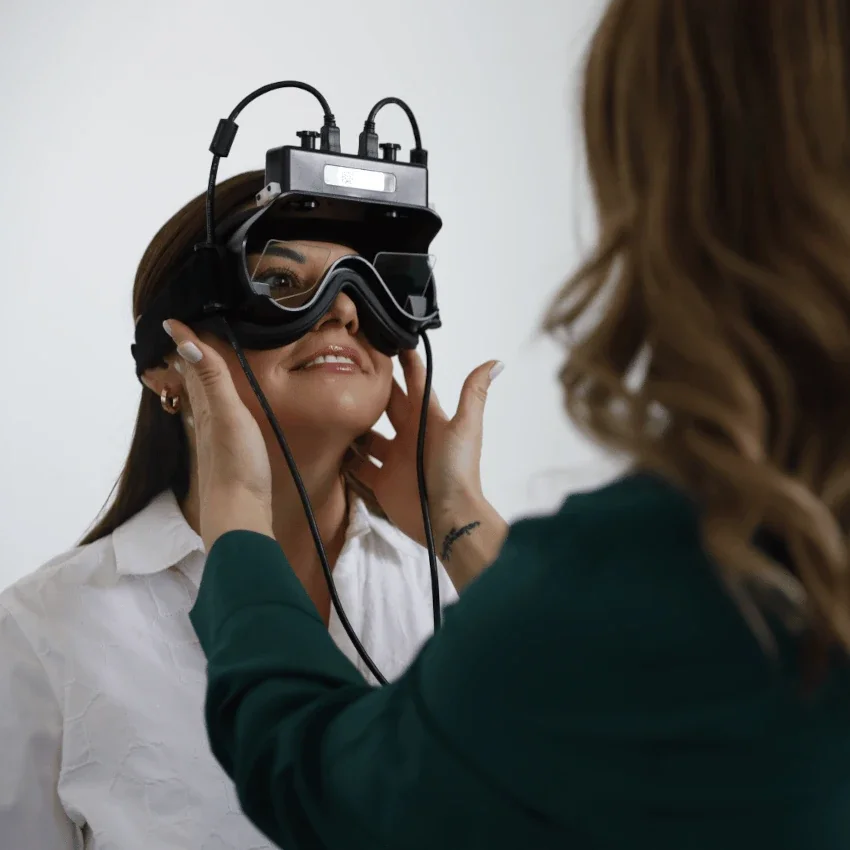
Your Diagnostic Evaluation and Testing appointment is a comprehensive assessment designed to look more closely at how your nervous system is functioning. We may assess areas such as balance, eye movements, coordination, posture, reflexes, vestibular function, autonomic regulation, and other clinical findings.
This appointment helps us identify patterns that may be contributing to your symptoms and determine what type of care may be appropriate. The findings from this evaluation are used to build a personalized treatment plan specific to your needs, goals, and clinical presentation.
*Not every patient requires the same tests, and this will vary depending on your individual case.
Personalized Care Plan

Step 3
Time varies
After reviewing our findings with you and explain what was identified during the assessment process. We may recommend follow-up visits, typically 1–2 times per week, or in some cases, an Intensive Care program.
Your recommended care plan will depend on your symptoms, assessment results, goals, schedule, and budget. We always work with you and your personal needs.
If an Intensive Care program is recommended, it may include multiple rehabilitation appointments per day along with supportive therapies such as Red Light Therapy or Acupuncture.
Symptoms that usually have a neurological origin
Many of our patients have come to us after months or even years of symptoms without realizing how much the nervous system was involved.
Your brain relies on three major sources of information to understand where you are in space: your proprioceptive system, your visual system, and your vestibular system. When one or more of these systems are not working well together, symptoms can appear in ways that may feel unrelated.

Proprioceptive
Poor balance or feeling unsteady
Clumsiness or frequent missteps
Difficulty knowing where your body is in space
Feeling disconnected from your body
Neck stiffness or tension associated with dizziness
Poor posture awareness
Difficulty walking in the dark or on uneven ground
Feeling worse when your eyes are closed
Trouble coordinating movements
Increased reliance on vision for balance
Muscle tightness, guarding, or abnormal movement patterns
Difficulty with fine motor control
Feeling like your body is “off,” misaligned, or not moving properly

Visual
Blurred or Double vision
Eye strain or eye fatigue
Light sensitivity
Difficulty focusing
Trouble reading or tracking lines of text
Headaches triggered by screens, reading, or busy environments
Dizziness in grocery stores, malls, crowds, or traffic
Feeling overwhelmed by visual motion
Poor depth perception
Difficulty tracking moving objects
Unstable vision while walking
The feeling that the world is bouncing, moving, or shifting
Trouble tolerating screens, scrolling, or fluorescent lights
Nausea or dizziness with visual stimulation

Vestibular
Dizziness
Vertigo or spinning sensations
Imbalance or Motion sensitivity
Nausea with movement
Feeling pulled, tilted, or pushed to one side
Difficulty walking straight
Poor balance when turning the head
Sensitivity to quick head movements
Trouble riding in cars, elevators, or escalators
Feeling like the floor is moving
Rocking, swaying, or floating sensations
Trouble stabilizing vision during movement
Feeling disoriented in open spaces or busy environments
Frequently Asked Questions
-
The Initial Intake is primarily an assessment and history-taking appointment. In some cases, we may provide initial recommendations, but the main purpose is to understand your case and determine whether further evaluation is needed before care begins. Because many of our patients have complex symptoms, we do not want to guess or begin treatment without first understanding which systems may be involved.
-
The Diagnostic Evaluation and Testing appointment is a comprehensive 90-minute assessment designed to look more closely at how different parts of your nervous system may be functioning. This may include testing related to balance, eye movements, coordination, visual processing, vestibular function, proprioception, and autonomic regulation, depending on your symptoms and clinical presentation.
-
Not every patient requires the same process. The Initial Intake helps us determine whether further testing is appropriate for your case. For many patients with dizziness, brain fog, visual discomfort, balance issues, concussion symptoms, migraines, dysautonomia-like symptoms, or complex neurological complaints, the Diagnostic Evaluation provides important information that helps guide recommendations.
-
After the evaluation process is complete, we will review her findings with you and explain what may be contributing to your symptoms. We will then discuss your recommended care options. This may include follow-up visits, usually 1–2 times per week, or in some cases, an Intensive Care program. The final decision is always yours and will depend on the recommendations, your schedule, your goals, and your budget.
-
An Intensive Care program is a more concentrated option that may be recommended for patients who need a higher level of support over a shorter period of time. These programs may include multiple session appointments with our chiropractors per day, along with supportive therapies such as Red Light Therapy. Intensive programs can vary in length, such as 1, 2, 3, or 5 days, depending on doctors recommendation and your goals.
-
The number of visits depends on your symptoms, evaluation findings, goals, and how your nervous system responds to care.
Some patients may be recommended weekly follow-up visits, while others may benefit from a more intensive short-term plan. We will provide recommendations after completing the evaluation process.
-
Yes. We want our patients to understand the recommended plan before moving forward. After your evaluation, we will review the findings, explain the care options, and answer your questions.
You are not obligated to proceed with the recommended care plan. The final decision is always yours.
-
Initial Intake is $365.
Comprehensive Diagnostic Evaluation and Testing is $550.
Individual test is $165
Neck Care Testing $55
During your Initial Intake, we’ll let you know if further testing is recommended. Not every patient requires the same testing, and this will depend on your individual case.
After the evaluation process is complete, we’ll discuss the recommended care options. This may include follow-up visits, usually 1–2 times per week, or in some cases, an Intensive Care program.
For reference, some of our treatment fees are:
30-minute follow-up visit: $190
30-minute rehab appointment: $190
Discounted Red Light Therapy: $25 per session
-
Many private insurance plans include chiropractic coverage, but the amount covered depends on your individual plan. Some plans cover a set amount per visit, while others cover a percentage up to an annual maximum.
Because our appointments are longer and more comprehensive than a standard chiropractic visit, your insurance may only cover part of the appointment cost. We recommend checking with your provider directly to confirm your chiropractic coverage, per-visit maximums, and annual limits.
-
In most cases, our services are not covered by provincial health care. Alberta Health does not typically cover chiropractic visits at private clinics in the same way it covers physician or hospital-based services.
Some patients may have partial coverage through private insurance, extended health benefits, WCB, motor vehicle accident claims, or other third-party coverage depending on their situation.
-
At this time, we do not direct bill for all appointments or all insurance providers. Patients are generally responsible for payment at the time of service, and we provide detailed receipts that can be submitted to insurance for reimbursement when eligible.
-
Yes. We are happy to work alongside your primary physician or other healthcare providers when appropriate. With your consent, we can share relevant findings, recommendations, or progress updates with your care team. This can be especially helpful for patients with complex symptoms, previous testing, referrals, medication considerations, or ongoing medical management.
-
That is common. Many of our patients have already seen physicians, specialists, physiotherapists, chiropractors, vestibular therapists, neurologists, or other providers before coming to us.
Please bring or send any relevant reports, imaging results, specialist notes, medication lists, or previous test results. These can help us better understand your case and avoid unnecessary repetition.
-
No. Our care is not a replacement for emergency care, primary medical care, specialist care, medication management, or medical diagnosis.
Our role is to assess how your nervous system may be functioning and provide neurologically based chiropractic and rehabilitation care when appropriate. We encourage patients to continue working with their medical team, especially when symptoms are complex or medically managed.