
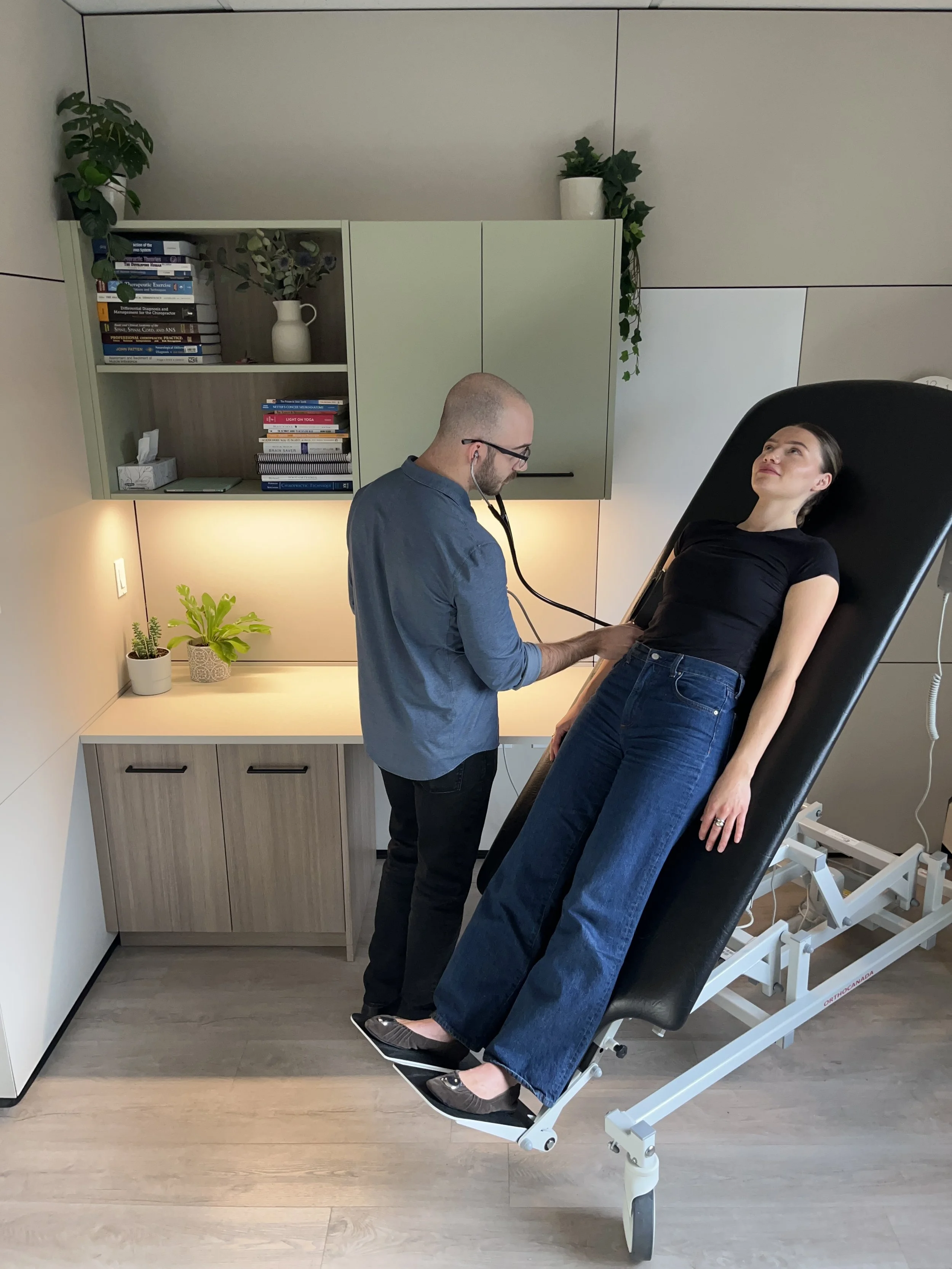
Tilt Table Testing In Calgary
This assessment may help identify patterns associated with orthostatic intolerance, suspected POTS, fainting, lightheadedness, or other autonomic-related symptoms.

What Is Tilt Table Testing?
Tilt table testing is an assessment used to observe how the body responds to changes in position, especially from lying down to upright. It may be used when someone experiences unexplained fainting, lightheadedness, dizziness, rapid heart rate on standing, or suspected orthostatic intolerance.
This can provide useful information about heart rate and blood pressure responses and may help identify patterns that warrant care planning, further medical evaluation, or referral.
What does it monitor?
Blood Pressure Responses
Hear Rate Changes
Orthostatic Intolerance
Autonomic Response
Position-Related Symptoms
What to expect during the test?
Testing begins with you lying flat on your back for approximately 10 minutes to establish baseline heart rate and blood pressure readings.
The table is then tilted to 45 degrees, followed by 70 degrees, with readings taken at each position.
You remain at a 70-degree angle while heart rate, blood pressure, and symptoms are monitored at regular intervals for approximately 10 minutes.

Is Tilt Table Test Appropriate For You?

Tilt table testing may be considered if you are experiencing symptoms or concerns such as:
✅Suspected POTS or orthostatic intolerance
✅Lightheadedness when standing or changing position
✅Fainting or near-fainting episodes
✅Exercise intolerance or unusual symptom flares with activity
✅Rapid heart rate or noticeable heart rate changes with position
✅Autonomic-related symptoms such as dizziness, sweating changes, temperature regulation issues, or fatigue
Book an appointment to discuss whether tilt table testing may be appropriate for your symptoms.
Frequently Asked Questions About Tilt Table Testing
-
A Tilt Table Test is an assessment used to observe how your heart rate, blood pressure, and symptoms respond when your body moves from lying down to an upright position. It may be used when someone is experiencing symptoms such as dizziness, fainting, near-fainting, lightheadedness, or rapid heart rate when standing.
-
Tilt Table Testing may be considered if you experience symptoms such as frequent dizziness, lightheadedness, fainting or near-fainting episodes, rapid heart rate when standing, or suspected orthostatic intolerance.
The test provides information about how your body responds to positional changes and may help guide care planning, referral, or collaboration with other healthcare providers when appropriate. -
Tilt Table Testing may help assess patterns associated with concerns such as suspected POTS, orthostatic intolerance, orthostatic hypotension, vasovagal syncope, fainting, near-fainting, and autonomic-related symptoms.
The test does not replace medical evaluation when one is needed. Results are interpreted in the context of your health history, symptoms, and clinical findings.
-
You will lie flat on a specialized table while your heart rate and blood pressure are monitored. The table is then gradually tilted upright to simulate standing while your body’s response is recorded.
The goal is to observe heart rate, blood pressure, symptoms, and positional tolerance during the test. -
The full appointment typically takes approximately 30 minutes, although the exact time may vary depending on your symptoms, preparation, and how your body responds during testing.
-
Tilt Table Testing is generally considered a safe, non-invasive assessment. You are monitored throughout the procedure by trained clinic staff.
Some patients may experience dizziness, nausea, lightheadedness, sweating, or faintness during the test. If symptoms occur, the table can be returned to a flat position and the test can be stopped if needed. -
It is possible, especially if you have a history of fainting or near-fainting. If this occurs, the table is returned to a flat position and your symptoms are monitored.
-
Preparation may include avoiding a heavy meal before your appointment, staying hydrated unless you have been instructed otherwise, wearing comfortable clothing, and following any specific instructions provided by the clinic.
If you take medications or have a medical condition that may affect testing, ask the clinic if any additional preparation is needed. -
No referral is required to book an assessment at Anew Chiropractic Clinic. However, your medical provider or insurance plan may have its own requirements, so it is best to check if you are unsure.
-
The results show how your heart rate, blood pressure, and symptoms respond to positional changes. These findings may help identify patterns such as orthostatic intolerance, blood pressure changes, heart rate changes, or symptom responses that occur when upright.
Your results are reviewed alongside your health history and clinical presentation to help determine appropriate next steps. -
After the test, your results will be reviewed and explained to you. Depending on your findings, next steps may include care recommendations, lifestyle or home-care guidance, referral to another healthcare provider, or collaboration with your existing care team.
-
Coverage depends on your insurance provider and plan. It is best to check with your insurance company directly or contact the clinic for guidance.
-
No. The test is non-invasive and should not be painful. Some patients may feel temporary symptoms such as dizziness, nausea, lightheadedness, or faintness if those symptoms are triggered during the test.
-
The cost of a Tilt Table Test at Anew Chiropractic Clinic is $165.
If you have extended health benefits, partial reimbursement may be available depending on your provider and plan. We recommend checking with your insurance company for coverage details.