
POTS Assessment in Calgary
We assess how the nervous system responds to posture and movement to guide individualized, non-invasive care.
Unsure about your symptoms? Book a 30-min Case Review Consultation today!
What Is POTS?
Postural Orthostatic Tachycardia Syndrome (POTS) is a condition of the autonomic nervous system where the heart rate increases significantly when moving from lying down to standing. This response occurs because the body has difficulty regulating blood flow and circulation against gravity. As a result, the brain and body may not receive adequate blood flow efficiently when upright, leading to symptoms such as dizziness, fatigue, and brain fog. POTS is one type of dysautonomia and can vary in severity and presentation.
Common Symptoms of POTS
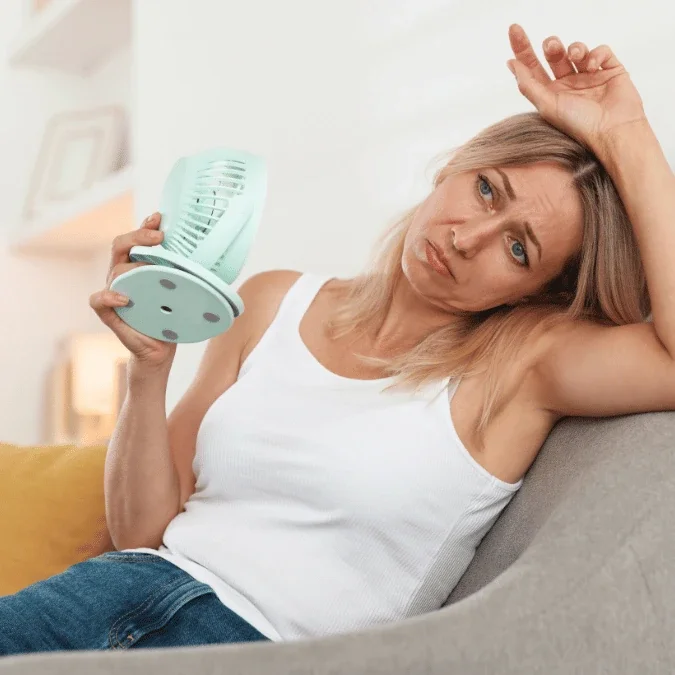
POTS can affect multiple systems in the body. Common symptoms may include a rapid heart rate when standing, lightheadedness or dizziness, fatigue, low energy, brain fog, difficulty concentrating, shortness of breath, exercise intolerance, headaches, nausea, palpitations, and feeling faint or near fainting. Symptoms are often worse when standing for long periods, in warm environments, or during physical exertion.
Common Causes of POTS

POTS can develop from a variety of underlying factors. Common contributors may include post-viral conditions such as COVID-19, concussion or head injury, prolonged inactivity or deconditioning, autonomic nervous system dysfunction, and chronic stress or nervous system overload. In many cases, POTS is multifactorial, meaning multiple systems may be involved.
How POTS Affects the Body
When standing, gravity causes blood to shift toward the lower body. In a typical response, the autonomic nervous system adjusts heart rate and blood vessel tone to help maintain stable circulation. In POTS, this regulation is impaired, and the body compensates by increasing heart rate significantly, although this does not always effectively stabilize blood flow. This can lead to reduced blood flow efficiency to the brain, an increased heart rate without adequate circulation support, difficulty tolerating upright posture, and symptoms that fluctuate depending on activity and environment. Understanding this mechanism is key to guiding appropriate care.

Conditions Associated with POTS
POTS can occur alongside several other conditions. These may include:




How We Assess POTS
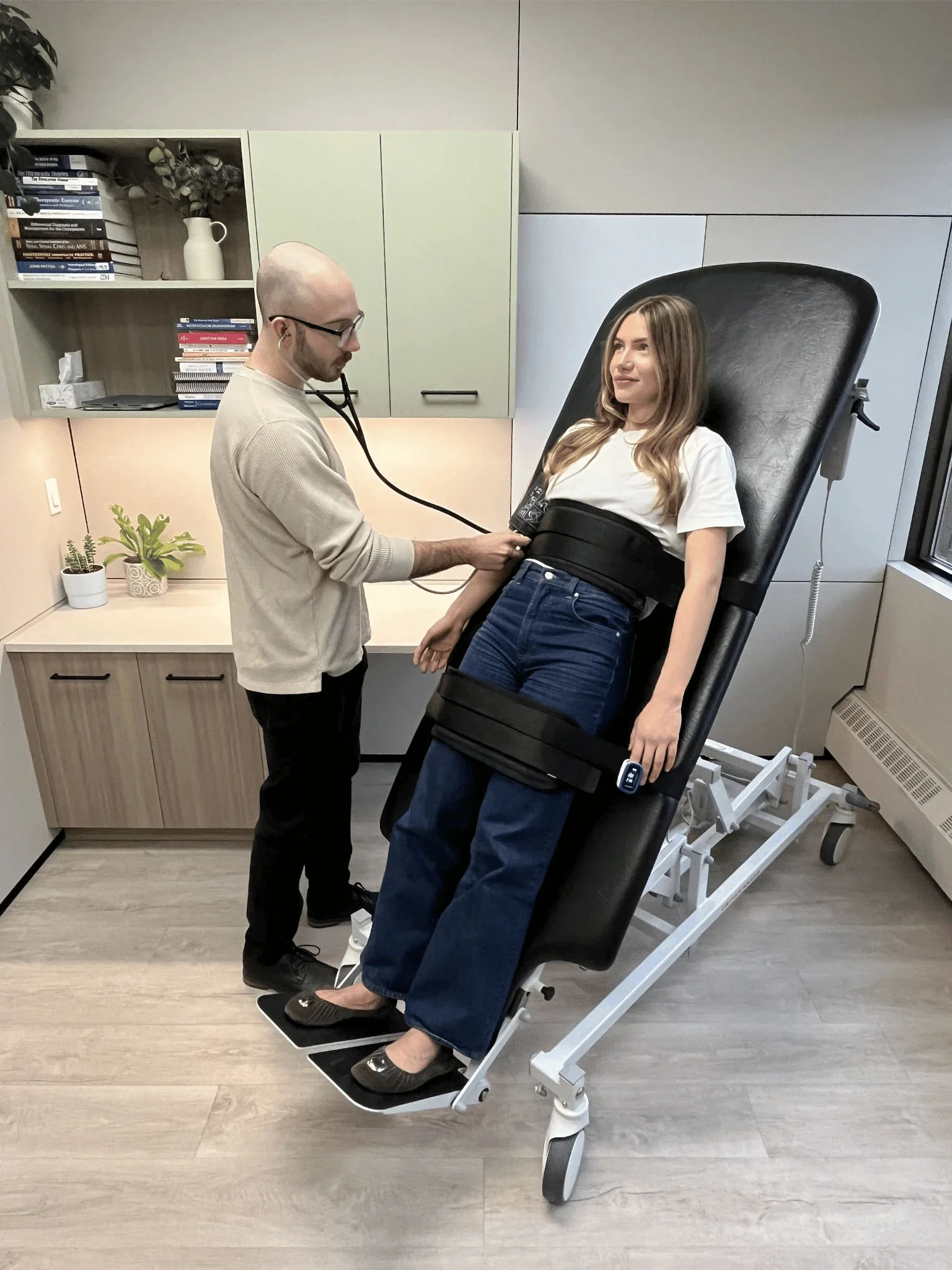
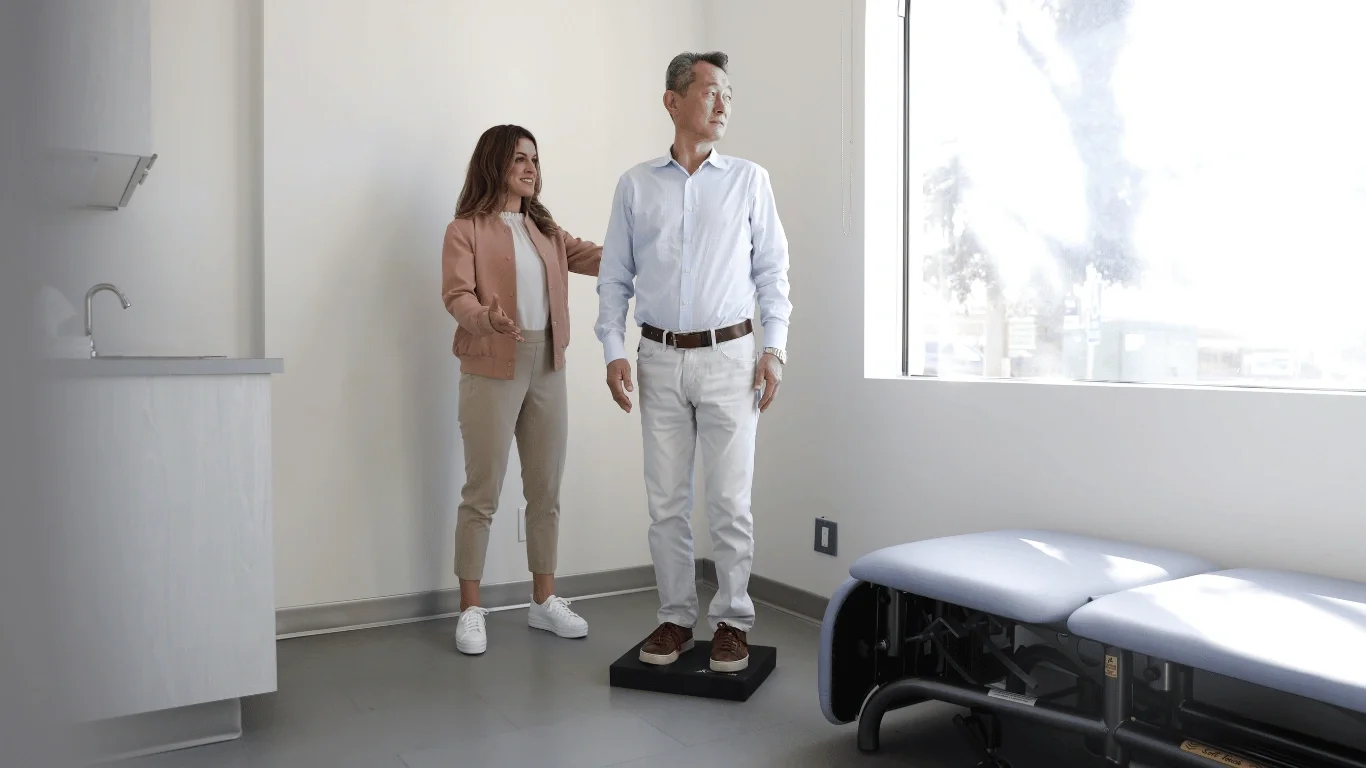
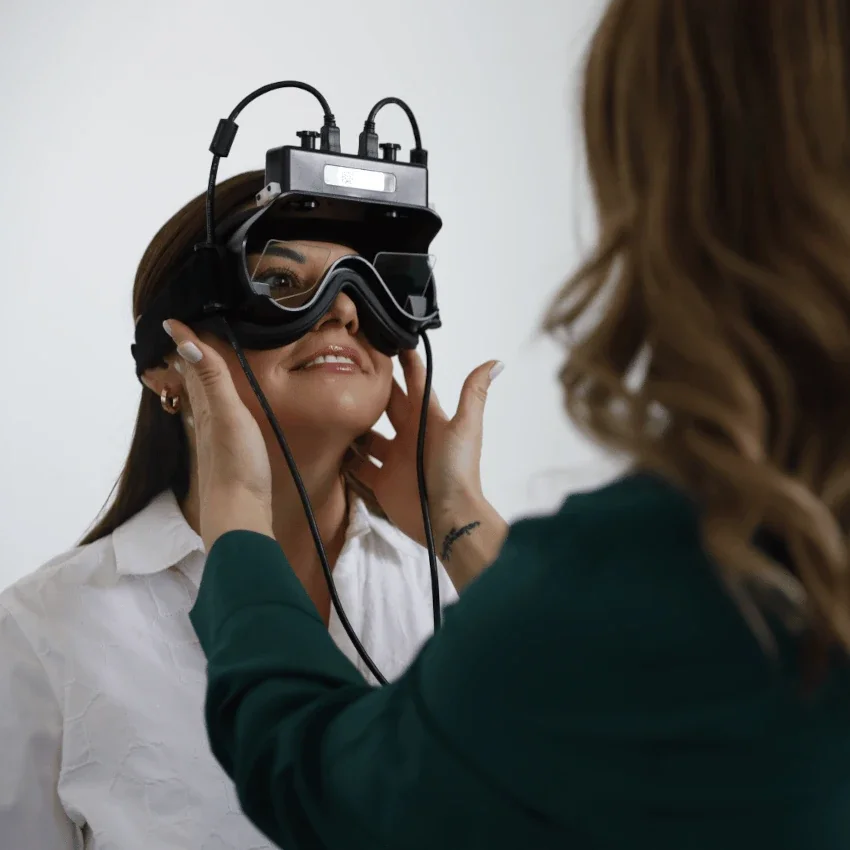
Assessment focuses on how your body responds to changes in posture and activity. This may include a detailed symptom history, heart rate and blood pressure changes from lying to standing, neurological and cognitive screening, balance and coordination testing, eye movement and visual tracking assessments, and evaluation of autonomic nervous system responses. In some cases, tilt table testing may be used as part of a broader diagnostic process.
POTS Care Approach
Care is individualized and focuses on improving the body’s ability to regulate circulation and tolerate activity. Depending on your findings, care may include gradual activity and conditioning programs, breathing and nervous system regulation strategies, balance and coordination exercises, neurological stimulation exercises, structured pacing and recovery strategies, and lifestyle guidance related to hydration, movement tolerance, and consistency. The goal is to improve how the nervous system responds to posture and reduce symptom intensity over time.
When Should You Seek Help for POTS?
You may benefit from an assessment if you experience a rapid heart rate when standing, persistent dizziness or lightheadedness, fatigue that limits daily activity, brain fog or difficulty concentrating, symptoms following illness, including COVID-19, or symptoms after a concussion or injury. Early evaluation can help identify patterns and guide care.
POTS Frequently Asked Questions
-
The exact cause is not always clear. It may develop following viral illness, concussion, or other stressors affecting the autonomic nervous system.
-
Yes. POTS is one of the most common forms of dysautonomia.
-
Yes. Many people with POTS experience dizziness, fatigue, brain fog, and difficulty tolerating standing.
-
Diagnosis is typically made by a physician using heart rate measurements, tilt table testing, and evaluation of symptoms.
-
POTS is typically characterized by an increase in heart rate of 30 beats per minute or more within 10 minutes of standing.
-
POTS can significantly affect quality of life, but it is generally not considered life-threatening. Proper management can help improve symptoms.
-
Some individuals improve over time, while others manage symptoms long-term. Outcomes vary depending on underlying causes.

Get Assessed for POTS
If you are experiencing symptoms of POTS, understanding how your body responds to posture and movement is the first step toward improving your symptoms.
At Anew Chiropractic Clinic, we take a comprehensive approach to assessing and supporting nervous system function.
Book a 30-minute Virtual or Phone Case Review consultation, we’ll listen to your symptoms, answer your questions, and help you determine the most appropriate next steps for care.