

No two patients are alike. Our Intensive Program brings detailed evaluation, diagnostic testing, daily rehabilitation and supportive therapies together in one planned schedule over a defined number of days, for patients who can commit to that format.
When symptoms persist despite previous efforts, finding answers can feel overwhelming...
That’s why our Intensive Program provides a focused, personalized approach to neurologically-informed rehabilitation, helping us identify the underlying factors contributing to your symptoms and create a care plan that’s designed specifically for your needs.
Available as 3-Day, 5-Day and 10-Day or as recommended.

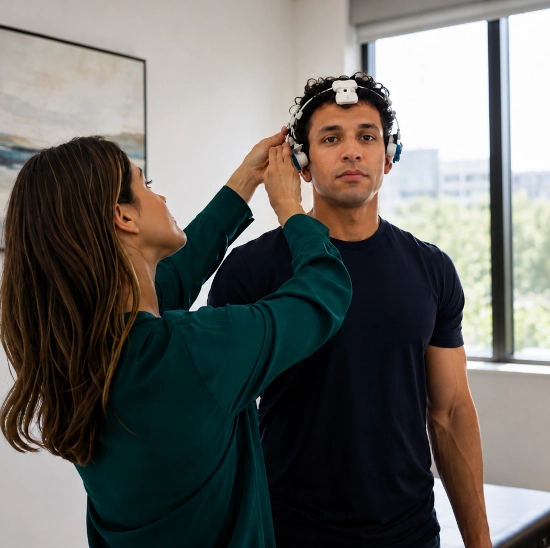
An Intensive Program is a structured, high-frequency rehabilitation format. Rather than spreading treatment over weeks or months, care is concentrated into a defined timeframe, with multiple sessions per day. This allows us to observe your response from one session to the next, adjust strategies the same day, and coordinate rehabilitation, supportive therapies and re-evaluation within one schedule. It also means several consecutive full days in the clinic. Every Intensive Program is customized based on your symptoms, clinical findings, goals, and response to care. Our goal is to better understand what is contributing to your symptoms and create a clear path forward.
Our Intensive Program may be appropriate for patients with complex, persistent, or unresolved symptoms who are looking for a deeper understanding of their condition and a more integrated approach to care. Many of our patients have already explored other options, received inconclusive answers, or continue to experience symptoms. Others travel from outside Calgary and choose the Intensive Program because it provides focused, individualized care over a shorter period of time, with the schedule planned in advance. The format suits patients who understand the daily time commitment and are ready to take an active part in each session and in the at-home exercise program that follows.
Initial Intake Assessment
During your Initial Intake, we take time to understand your symptoms, health history, previous efforts, and personal goals. This appointment helps us build a complete picture of your experience and identify areas that may require further evaluation.
Evaluation & Diagnostic Testing
Next, we perform a detailed neurological evaluation and diagnostic testing designed to identify areas of the nervous system that may not be functioning optimally. These findings help us understand the factors contributing to your symptoms and guide your care recommendations.
Personalized Care Recommendations
Once your evaluation is complete, we review our findings with you and discuss the most appropriate path forward. Depending on your symptoms, goals, and clinical findings, this may include a 3-day, 5-day or 10-day Intensive Program, our Hybrid Program, or other recommendations tailored to your needs.
Intensive Care & Progress Tracking
If an Intensive Program is recommended, your schedule will be carefully structured to support neurological care. Throughout your program, we perform re-evaluations to monitor findings, refine strategies, and provide an at-home exercise program and personalized recommendations for continued care after you return home.
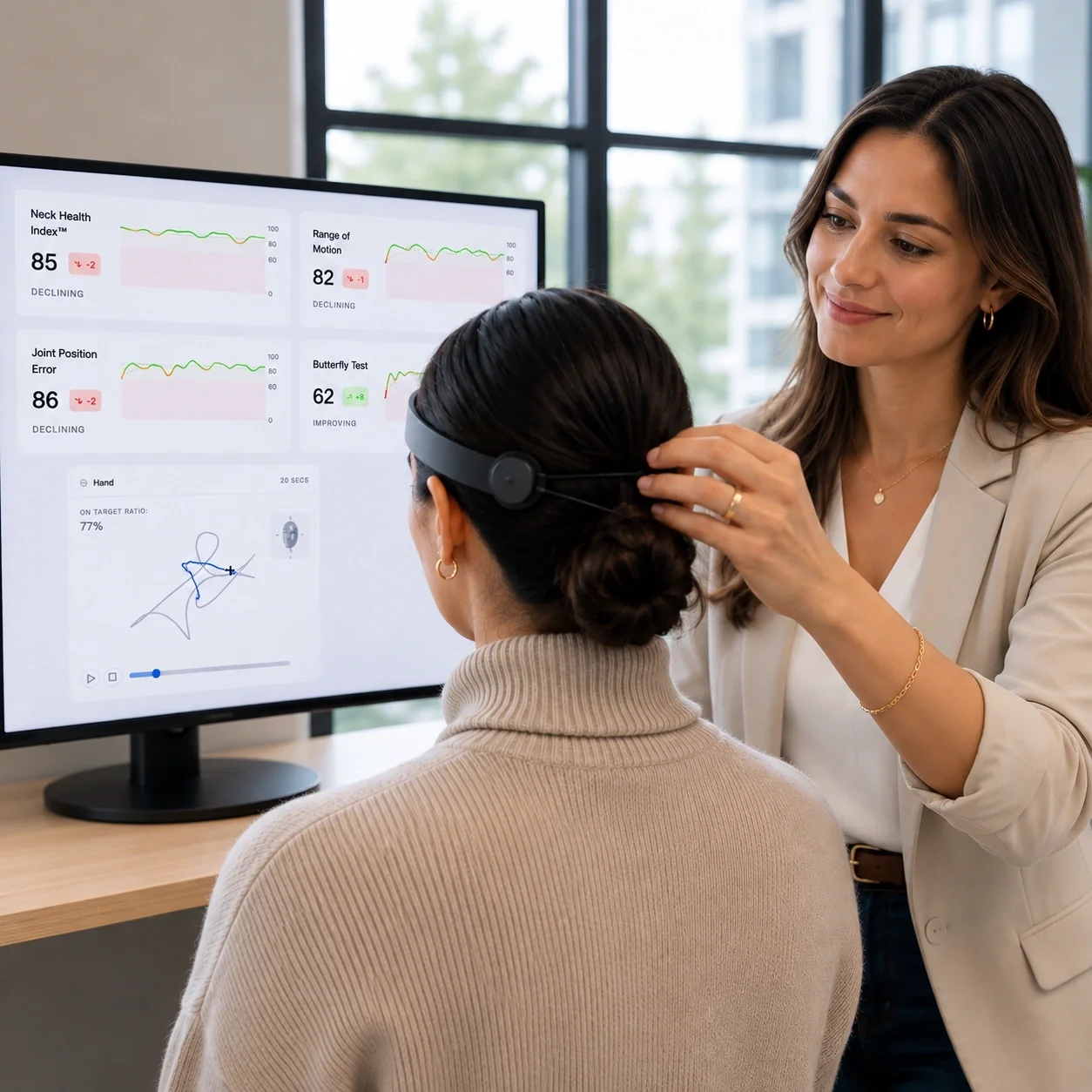
Testing recommendations vary by patient and are based on clinical findings.
Computerized Assessment of Postural Systems, or CAPS, uses a force plate to observe how your body maintains balance while standing. During the assessment, you stand on a specialized platform under different conditions while sensors record subtle shifts in weight and changes in position.
This assessment can provide information about postural control, balance strategies, and how your body responds to different balance challenges. These findings may help guide care recommendations, home exercises, referral, or co-management when appropriate.
Videonystagmography, or VNG, is a diagnostic test used to help determine whether dizziness or a balance disorder is related to an inner ear (vestibular) problem or a central nervous system issue. It is the modern, video-based version of an older test called electronystagmography (ENG). During the test, you wear specialized goggles equipped with infrared cameras that record and measure your involuntary eye movements, known as nystagmus. Because the inner ear balance system is directly connected to the eye muscles through the vestibulo-ocular reflex, tracking how your eyes move allows us to map how well your balance system is functioning.
A standard VNG evaluation takes about 60 to 90 minutes and has three main parts. Oculomotor (eye tracking) tests: you sit still and follow a moving light or dot on a screen with your eyes, which evaluates how well your brain tracks moving objects. Positional and postural tests: your head and body are moved into different positions, such as lying flat or turning quickly, to see if specific movements trigger dizziness or abnormal eye movements. Caloric (temperature) tests: the only part that evaluates each inner ear individually, in which small amounts of warm and cool air or water are gently irrigated into the ear canal; the temperature change briefly stimulates the balance system, mimicking a spinning sensation, and your eye responses show whether one ear is weaker than the other. Results are reviewed alongside your history and clinical findings to help guide appropriate next steps.
NeckCare technology is used to assess neck movement control and joint position sense. The system uses lightweight sensors to observe how accurately the neck and head move through specific tasks.
This assessment may provide information about neck control, proprioception, posture, and movement patterns that may be relevant for patients experiencing neck pain, headaches, dizziness, or balance-related concerns. Findings may help guide individualized care recommendations when appropriate.
Video Head Impulse Testing, or vHIT, is used to assess the vestibulo-ocular reflex, also known as the VOR. The VOR helps keep vision stable during head movement.
During the assessment, specialized goggles track eye movements while the head is moved in specific directions. The results can provide information about how the eyes and vestibular system are responding during quick head movements. These findings may be relevant for patients experiencing dizziness, balance concerns, motion sensitivity, or visual instability.
Tilt Table Testing is used to observe how heart rate, blood pressure, and symptoms respond to changes in position, especially when moving from lying down to upright.
During the assessment, you lie on a table that tilts to different angles while heart rate, blood pressure, and symptoms are monitored. This assessment may provide information about patterns associated with lightheadedness, fainting, near-fainting, orthostatic intolerance, suspected POTS, or other autonomic-related symptoms.
Tilt Table Testing is not part of our standard testing protocol. It may be performed on request or recommended by one of our providers based on your symptoms and clinical presentation.

Our 5-Day Intensive Program provides concentrated, comprehensive rehabilitation over one week, with patients typically spending 4-6 hours per day in the clinic, Monday through Friday. Treatment is personalized to each patient. Most patients complete a comprehensive assessment and diagnostic evaluation beforehand to identify the neurological systems contributing to their symptoms.
Throughout the week, patients participate in multiple rehabilitation sessions each day, with scheduled breaks and lunch. Regular re-evaluations help monitor findings, track neurological changes, and adjust treatment as needed. The goal is to provide repeated, targeted stimulation of the nervous system over a concentrated period, with each session informed by the one before. For an example of a typical week, the time commitment and associated costs, download one of our sample Intensive Program schedules below.
Monday to Friday Schedule note:
Initial Intake & Tests already completed
Plan your stay with us.
Check out our Accommodations and Transportation Guide below to help plan your visit to Calgary.
Download Guide
Anew Chiropractic Clinic partners with Medicard by iFinance to offer optional financing for eligible patients. Financing may help some patients spread the cost of care over time. Approval, payment terms, interest rates, repayment schedule, and financing conditions are determined directly by Medicard.
Medicard may offer:
Two approaches to care, designed around different schedules and needs. Our Intensive Program begins with a concentrated five-day rehabilitation period followed by approximately one to three months of ongoing care, while our Hybrid Program distributes appointments over approximately six to eight months. Both approaches are tailored to your individual clinical findings and progress.
5 consecutive days, followed by 1-3 months of ongoing care
Approximately 6-8 months
Multiple sessions daily during the Intensive, followed by 1-2 visits per week
Typically 2 visits per week, adjustable up to 4 when appropriate
Concentrated rehabilitation followed by ongoing in-clinic care and home exercises
Ongoing in-clinic care supported by a personalized home exercise plan
Re-evaluations during the Intensive, followed by continued progress monitoring
Re-evaluation and diagnostic testing after approximately 8-10 treatments
5 consecutive full days, followed by approximately 1-3 months of continued appointments
Appointments distributed over approximately 6-8 months
$4,390-$8,950
$9,880-$27,150
Individuals able to commit to an intensive treatment schedule and subsequent ongoing care
Individuals who prefer a more gradual approach with appointments distributed over time
5 consecutive days, followed by 1-3 months of ongoing care
Multiple sessions daily during the Intensive, followed by 1-2 visits per week
Concentrated rehabilitation followed by ongoing in-clinic care and home exercises
Re-evaluations during the Intensive, followed by continued progress monitoring
5 consecutive full days, followed by approximately 1-3 months of continued appointments
$4,390-$8,950
Individuals able to commit to an intensive treatment schedule and subsequent ongoing care
Approximately 6-8 months
Typically 2 visits per week, adjustable up to 4 when appropriate
Ongoing in-clinic care supported by a personalized home exercise plan
Re-evaluation and diagnostic testing after approximately 8-10 treatments
Appointments distributed over approximately 6-8 months
$9,880-$27,150
Individuals who prefer a more gradual approach with appointments distributed over time
The five-day Intensive schedule includes two intensive re-evaluations. It does not include the Initial Intake and Comprehensive Evaluation. The subsequent 1-3 months of ongoing care, at 1-2 Neuro-Chiropractic Visits per week, account for up to $4,560 of this estimate.
Care typically begins with 2 Neuro-Chiropractic Visits per week and may increase to up to 4 visits per week when clinically appropriate, over an estimated 6-8 months, with Comprehensive Re-Evaluations included every 8-10 visits.
Actual frequency and total costs depend on individual clinical findings and progress, and may decrease as patients progress. None of these estimates are paid upfront. These estimates assume the initial treatment frequency is maintained throughout the estimated care period.
Our team can help you understand the structure of each option and determine the appropriate next step based on your needs, readiness, and ability to commit to the recommended care plan.
An Intensive Program is a higher-frequency care option that may be recommended for some patients after an initial assessment and evaluation. Instead of spacing appointments over several weeks or months, care is scheduled over a shorter period of time with multiple sessions per day. The purpose is to provide a structured schedule for assessment, rehabilitation, monitoring, and at-home exercise program planning when this approach is clinically appropriate. Recommendations are individualized and based on your health history, assessment findings, goals, travel needs, and response to care.
Every patient responds differently. The goal of the Intensive Program is to provide a structured care schedule, monitor clinical findings over time, and adjust recommendations based on your response. Some patients report changes in symptoms such as dizziness, balance, coordination, visual comfort, activity tolerance, or pain. However, results vary and cannot be guaranteed.
Progress is monitored through clinical observations and objective findings when appropriate. Re-evaluations during and after your program are used to review findings and adjust your plan.
The Intensive Program is usually scheduled Monday through Friday. Start times often begin around 9:00 or 9:30 AM, depending on scheduling availability. Patients should generally expect to be in the clinic for approximately 4 to 6 hours per day. Each day may include multiple rehabilitation sessions, structured breaks, and supportive therapies when appropriate. A sample day may include several 30-minute rehabilitation sessions, rest periods, and therapies such as red light therapy if included in the recommended plan. Your exact schedule will be reviewed with you before care begins.
Each plan is individualized. A typical 5-day intensive schedule may include:
-Up to 16 rehabilitation sessions, approximately 30 minutes each
-Up to 10 red light therapy sessions, approximately 30 minutes each
-Up to 2 Re-evaluations and review appointments to monitor findings and adjust recommendations when appropriate
Your exact schedule may vary depending on your assessment findings, goals, clinical needs, and response to care.
Your Intensive Program schedule is planned in advance so appointments, testing, breaks, and supportive therapies can be coordinated appropriately. There may be some flexibility depending on clinic availability and your needs. However, because the Intensive Program involves multiple appointments in a shorter period of time, we recommend planning your week carefully before starting.
An Intensive Program may be considered for patients with more complex or persistent symptoms, patients traveling from outside Calgary, or patients whose assessment findings suggest that a higher-frequency care schedule may be appropriate. Whether an Intensive Program is recommended is determined after your Initial Intake Assessment and evaluation, and it also depends on your ability to commit to several consecutive full days in the clinic. If an Intensive Program is not appropriate, we will discuss other care options or referral recommendations when needed.
You can begin by booking an Initial Intake Assessment, with further evaluation if indicated. After these appointments, your chiropractor will review your findings and discuss whether an Intensive Program is appropriate, what the schedule would involve, and the fees. If an Intensive Program is recommended and you choose to proceed, our team will help coordinate the appointments through Jane App, our secure online booking system.
The first step is to complete the recommended assessment process. This may include:
-Initial Intake Assessment: approximately 75 minutes
-Evaluation, Testing, and Review: approximately 90 minutes
These appointments may be completed on the same day or scheduled separately, depending on your availability and clinical needs. This process helps us understand your history, assess relevant findings, and determine what care options may be appropriate.
Costs vary depending on the assessment, testing, number of sessions, supportive therapies, and care recommendations included in your plan. We may recommend a 3-day, 5-day or 10-day Intensive Program.
Typical fees may include:
-Initial Intake Assessment: $365
-Evaluation, Testing, and Review: $550
-Rehabilitation Sessions: approximately $190 per session
-Red Light Therapy: approximately $25 per session
-Re-Evaluation, Testing, and Review: $550
A five-day Intensive is estimated at $4,390-$8,950 depending on the schedule and services included, excluding the Initial Intake and Comprehensive Evaluation. All fees and recommended services will be reviewed with you before beginning care.
You are not required to proceed with an Intensive Program, and recommendations may change based on your clinical needs and response to care.
Coverage depends on your insurance provider and individual plan. Services are billed using the appropriate clinic fee codes for the assessment, testing, treatment, or therapy provided.
We provide detailed receipts that patients can submit to their extended health benefit provider for possible reimbursement. We recommend confirming your coverage, annual limits, referral requirements, and reimbursement rules with your insurance provider before beginning care.
At this time, we do not offer direct billing. Patients pay the clinic directly and receive detailed receipts that may be submitted to their insurance provider for possible reimbursement.
Yes. We offer financing options through Medicard by iFinance for eligible patients. Financing allows approved patients to spread the cost of care over time through monthly payments. Approval, interest rates, repayment terms, and financing conditions are determined directly by Medicard.
Financing is optional. Patients are encouraged to review all terms carefully before applying. To learn more, please visit www.medicard.com.
Yes. With written consent, we can provide relevant clinical documentation, chart notes, reports, or test results when requested.
Additional fees may apply for report preparation or administrative documentation. Reimbursement for these fees depends on your insurer, legal representative, or third-party payer, so we recommend confirming coverage directly with them.

Our approach is structured, assessment-led and our care requires active participation, and patients should understand the process before committing. If you are ready to proceed, you can book an Initial Intake Assessment directly. If you still have questions, a 30-minute Case Review Phone Consultation is available first. During the call we briefly review your health history, current symptoms and previous testing, explain how our integrated approach and care process work, outline the time and financial commitment involved, and discuss how our care could complement the services you are already receiving. The Case Review Consultation is optional. It helps you decide whether to book an Initial Intake Assessment; it is not a substitute for an in-person assessment or a medical diagnosis.
Book a Case Review Consultation