
Motion Sickness Treatment in Calgary: Anew’s Functional Neurology Approach to Rebalancing Your Brain

Does every car ride, boat trip, or flight leave you nauseous or dizzy?
Motion sickness can feel unpredictable and limiting. For some, it’s mild discomfort. For others, it’s severe nausea, vertigo, headaches, and anxiety around travel.
At Anew Chiropractic, we take a different approach. Instead of masking symptoms, we focus on why your brain is struggling to process motion — and help retrain it for long-term relief.
Why Does Motion Sickness Happen?
Motion sickness occurs when the brain receives conflicting signals from three major sensory systems:
Visual system (eyes)
Vestibular system (inner ear balance organs)
Proprioceptive system (body position sensors)
When these systems don’t agree, the brain interprets the mismatch as a threat — triggering nausea, dizziness, and discomfort.
The 3 Systems Behind Motion Sickness
👁 The Visual System
Your eyes tell your brain where you are in space.
Example:
In a moving car, your inner ear senses motion.
But if you're reading or looking at a screen, your eyes say you're stationary.
This sensory conflict creates confusion — leading to nausea and dizziness.

🌀 The Vestibular System (Inner Ear)
Located deep within the inner ear, this system detects:
Head movement
Acceleration
Position changes
Gravity orientation
If the vestibular system is hypersensitive or dysfunctional, even normal motion can trigger symptoms like:
Vertigo
Lightheadedness
Imbalance
Motion intolerance
🧠 The Proprioceptive System
This system gathers information from:
Muscles
Joints
Tendons
It tells your brain where your body is without needing to look.
If proprioceptive input is weak or inaccurate, it worsens sensory conflict and increases motion sensitivity.
Our Approach: Functional Neurology for Motion Sickness
Functional neurology focuses on identifying which of these systems is underperforming — and then strengthening it through targeted rehabilitation.
Rather than suppressing symptoms with medication, we help your brain:
Process motion more efficiently
Improve balance and coordination
Reduce sensory conflict
Increase motion tolerance
Step 1: Comprehensive Assessment
We begin with a detailed evaluation that may include:
Full neurological examination
Vestibular testing
Eye movement assessment
Balance and coordination testing
Cervical spine evaluation
This allows us to pinpoint whether dysfunction lies in the visual, vestibular, or proprioceptive systems — or a combination.
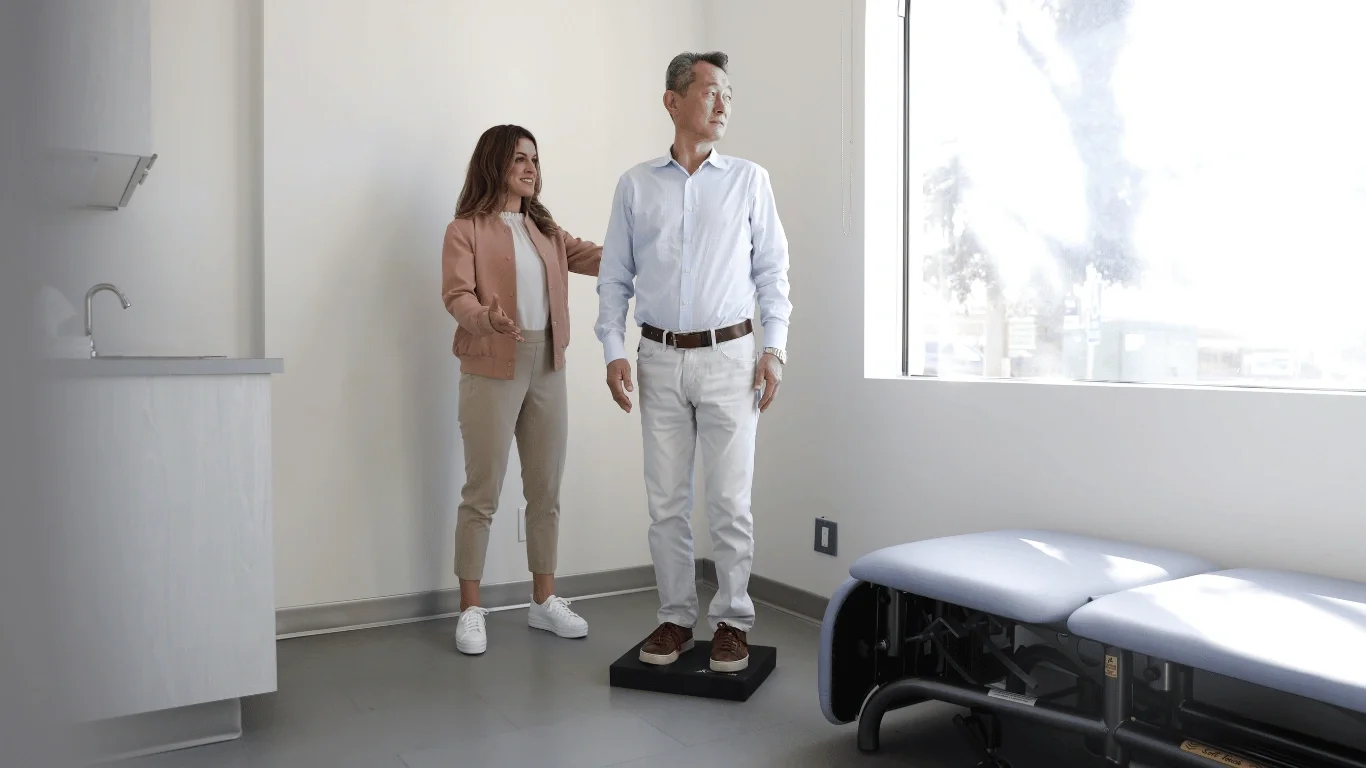
Step 2: Targeted Rehabilitation
Visual Rehabilitation
Exercises may include:
Eye tracking drills
Visual stabilization tasks
Controlled exposure to motion stimuli
Virtual reality-based motion training
These exercises retrain how the brain processes visual input during movement.
Vestibular Rehabilitation
We use specialized vestibular exercises such as:
Head movement retraining
Balance integration drills
Habituation therapy
Habituation is especially powerful. It involves controlled exposure to motion in a way that gradually reduces sensitivity over time.
Proprioceptive Training
We improve body awareness through:
Balance challenges
Coordination drills
Postural retraining
Dynamic stability exercises
Better proprioception helps the brain integrate sensory input more effectively — reducing motion-induced symptoms.
Treatment Options at Anew
We offer flexible care options based on severity and patient preference.
Intensive Treatment Plan
4 sessions per day
5 consecutive days
This concentrated approach is ideal for patients seeking faster progress or traveling from outside Calgary.
After completion, you’ll receive a structured home program to continue improvements.
Progressive Treatment Plan
3 visits per week
4 weeks aproximately
This gradual approach allows steady neurological retraining with ongoing monitoring and adjustment.
Customized Home Program
Every patient receives a personalized exercise plan to reinforce progress and support long-term results.
Ongoing Support & Re-Evaluation
Motion tolerance improves progressively. We provide:
Post-treatment evaluations
Progress tracking
Adjusted home programming
In-person or virtual follow-ups
Our goal is sustainable improvement — not temporary relief.
Who Can Benefit?
Our motion sickness treatment may help individuals who experience:
Car sickness
Sea sickness
Airplane nausea
VR-induced motion sickness
Persistent dizziness
Vestibular sensitivity
Travel anxiety linked to motion symptoms

Why Choose Anew for Motion Sickness Treatment in Calgary?
✔ Advanced neurological assessment
✔ Evidence-informed rehabilitation
✔ Non-invasive treatment
✔ Personalized care plans
✔ Whole-brain approach
Your Next Step
If motion sickness has been limiting your life, there is a better approach than “just avoiding travel.”
📍 Contact Anew Chiropractic today to schedule your assessment and begin retraining your brain for better balance and motion tolerance.
References:
Hain, T. C., & Pearlman, E. (2012).The vestibular system and its disorders. Current Neurology and Neuroscience Reports, 12(6), 521-527.
Grosjean, S., et al. (2020).Functional neurology: A new model for treating brain-based disorders. Journal of Clinical Neuroscience, 71, 92-98.
Demer, J. L., & Leigh, R. J. (2011).Motion sickness: From physiology to treatment. CNS Spectrums, 16(4), 155-162.
Borenstein, M. T., et al. (2004).Chronic inflammation and motion sickness: An overlooked cause of vestibular dysfunction. The Journal of Vestibular Research, 14(5), 229-234.
Cohen, J. A., et al. (2015).Proprioception and balance training: Rehabilitation strategies for managing motion sickness. Journal of Rehabilitation Research and Development, 52(6), 655-668.
