
Understanding Retained Primitive Reflexes: A Nervous System Perspective for Children and Families

Primitive reflexes are automatic movement patterns that babies are born with. These reflexes play an essential role in early survival and development, helping infants respond to their environment before higher levels of motor control are established. As the brain and nervous system mature, these reflexes are normally integrated and replaced by more controlled, voluntary movement.
When that process does not happen fully, retained primitive reflexes may continue to influence posture, coordination, focus, balance, and emotional regulation. At Anew Chiropractic Clinic in Calgary, this is one of the nervous system patterns we sometimes assess when children are struggling with movement, attention, or sensory challenges.
What Are Primitive Reflexes?
Primitive reflexes are automatic responses that originate in the brainstem and are present in infancy. They are a normal part of early neurological development and help babies feed, protect themselves, and begin interacting with the world around them. Examples include the Moro reflex, which is triggered by sudden movement or loud noise, the Asymmetric Tonic Neck Reflex, which affects arm and leg position when the head turns, the palmar grasp reflex, and the rooting reflex. These are expected in infancy, but they are meant to fade as the nervous system develops.
What Does It Mean When a Reflex Is Retained?
A retained primitive reflex is one that remains active beyond the age when it would normally be integrated. Instead of being replaced by mature movement and postural control, the body continues to rely on an earlier automatic pattern. This can affect how a child moves, learns, responds to stress, and processes sensory information. Retained reflexes are not a diagnosis by themselves. They are better understood as signs that parts of neurological development may need additional support.
Signs of Retained Primitive Reflexes
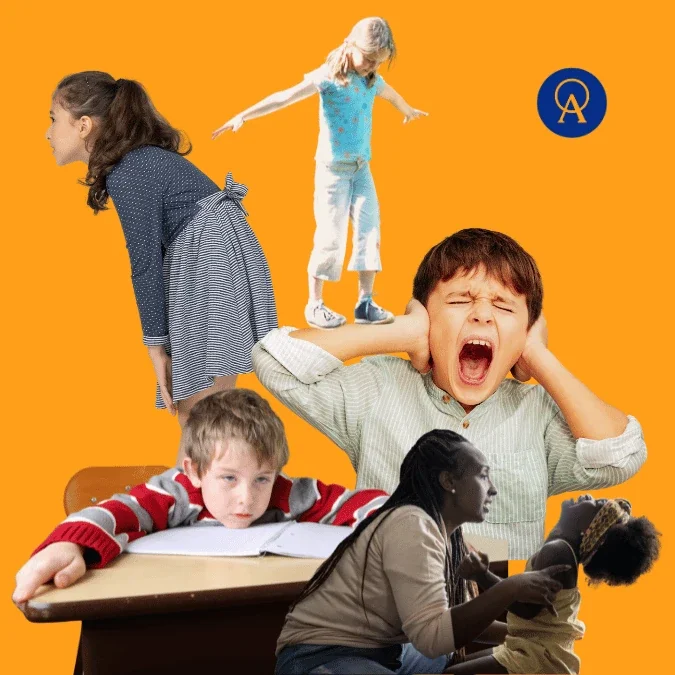
Children with retained primitive reflexes may present in different ways. Some struggle with posture and coordination, while others show signs related to attention, sensory sensitivity, or emotional regulation. Parents may notice slouching, clumsiness, difficulty sitting still, trouble concentrating, or stronger-than-expected reactions to sound, light, or touch. Reading and handwriting can also be affected in some cases.
In adults, these patterns may sometimes show up differently, such as chronic tension, poor balance, or increased stress sensitivity. Because symptoms can overlap with other concerns, an assessment is often the most useful way to determine whether retained reflexes may be part of the picture.
Why Do Reflexes Stay Active?
There is no single reason why reflexes may remain active longer than expected. A number of factors can influence neurological development, including birth stress, limited tummy time, developmental delays, recurrent illness, prolonged stress, and broader nervous system dysregulation.
What matters most is that reflex integration is a neurological process. When brain-body communication improves, the nervous system often becomes more capable of developing more efficient and mature patterns of movement and regulation.
How Chiropractic Care May Help
At Anew Chiropractic Clinic, retained primitive reflexes are approached from a nervous system perspective. Chiropractic care is not about treating a single reflex in isolation. The focus is on supporting how the brain, spine, and body communicate so that development and regulation can improve more naturally over time.
Care may include gentle chiropractic adjustments, movement-based exercises, balance and coordination activities, postural support, and home strategies for families. The goal is to create an environment where the nervous system can adapt and function more effectively.
What to Expect During an Assessment
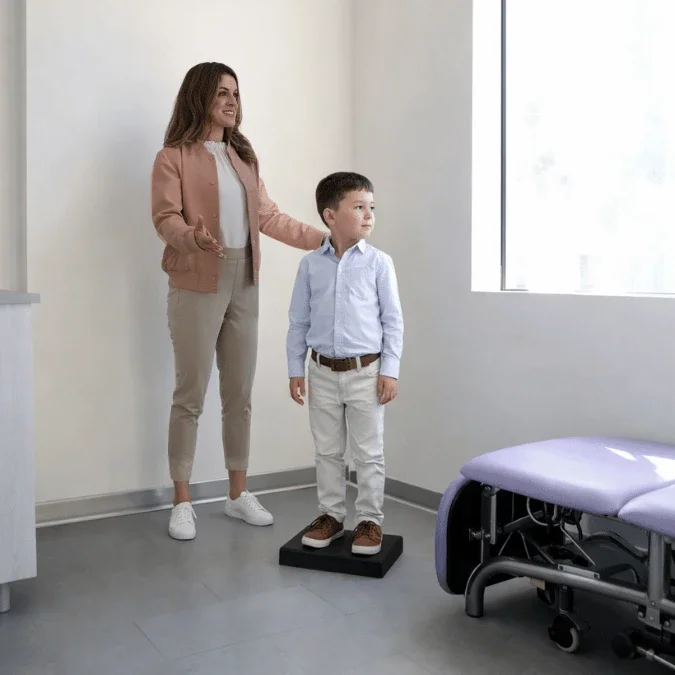
If retained primitive reflexes are suspected, an assessment typically begins with a detailed history and a review of developmental patterns. This may be followed by postural and movement screening, simple reflex testing, and an evaluation of balance and coordination.
From there, care is personalized to the child’s needs. The purpose of the assessment is not just to label symptoms, but to understand how the nervous system is functioning and where support may be helpful.
Is It Too Late to Integrate Reflexes?
No. Although primitive reflexes emerge in infancy, the nervous system remains adaptable throughout life. Early support is ideal, but meaningful improvement is still possible later in childhood and even into adulthood. Neurodevelopment is not always linear, and the body can continue to change when it is given the right kind of support and stimulation.
When Should Parents Consider an Assessment?
If your child is dealing with coordination problems, posture issues, difficulty focusing, sensory sensitivity, or emotional overreactions, it may be worth exploring whether retained primitive reflexes are contributing to those challenges. These signs do not automatically mean reflex retention is present, but they can indicate that a closer neurological assessment would be useful. For families looking for a more root-cause, nervous-system-based perspective, this type of evaluation can provide clarity and direction.
Frequent Asked Questions
-
Retained primitive reflexes are infant reflexes that remain active past the age when they would normally be integrated. When they persist, they can affect movement, posture, coordination, focus, and sensory processing.
-
They may contribute to clumsiness, poor posture, trouble focusing, difficulty sitting still, sensory sensitivity, emotional overreactions, and learning-related challenges such as reading or handwriting difficulties.
-
Yes. While they are most often discussed in children, adults can also present with retained reflex patterns. In adults, they may be associated with chronic tension, stress sensitivity, coordination problems, or balance issues.
-
Assessment may include a developmental history, postural and movement screening, simple reflex testing, and evaluation of balance and coordination.
-
Not exactly. Chiropractic care in this context focuses on supporting nervous system function and improving brain-body communication. Reflex-based exercises may be part of care, but the broader goal is neurological support rather than treating a reflex in isolation.
Ready to Learn More?
If you have concerns about your child’s coordination, focus, posture, or sensory regulation, an assessment may help identify whether retained primitive reflexes are part of the picture.
Anew Chiropractic Clinic in Calgary provides evidence-informed care focused on nervous system function, development, and regulation. If you would like to explore whether this approach is appropriate for your child, contact the clinic to schedule an assessment.
Supporting development starts with understanding the nervous system.
References
Blythe, S. G. (2005). The well balanced child: Movement and early learning. Hawthorn Press.
Blythe, S. G. (2017). Neuromotor immaturity in children and adults: The INPP screening test for clinicians and health practitioners. John Wiley & Sons.
Goddard Blythe, S. (2002). Neurological dysfunction as a significant factor in children diagnosed with dyslexia. The Proceedings of the 5th British Dyslexia Association International Conference, 5–16.
Goddard Blythe, S. A. (2012). Reflexes, learning and behavior: A window into the child’s mind. Fern Ridge Press.
Konicarova, J., & Bob, P. (2012). Retained primitive reflexes and ADHD in children. Activitas Nervosa Superior Rediviva, 54(3–4), 135–138.
McPhillips, M., Hepper, P. G., & Mulhern, G. (2000). Effects of replicating primary-reflex movements on specific reading difficulties in children: A randomised, double-blind, controlled trial. The Lancet, 355(9203), 537–541. https://doi.org/10.1016/S0140-6736(99)02179-0
Teitelbaum, P., Teitelbaum, O., Nye, J., Fryman, J., & Maurer, R. G. (1998). Movement analysis in infancy may be useful for early diagnosis of autism. Proceedings of the National Academy of Sciences, 95(23), 13982–13987. https://doi.org/10.1073/pnas.95.23.13982
Zafeiriou, D. I. (2004). Primitive reflexes and postural reactions in the neurodevelopmental examination. Pediatric Neurology, 31(1), 1–8. https://doi.org/10.1016/j.pediatrneurol.2004.01.012
